Should Singapore tax the wealthy more?

singapore-sands_rich

This year’s Singapore Budget has garnered accolades for its focus on lower-income groups and the so-called Pioneer generation. One glaring omission, however, is in efforts to redistribute wealth. That is a missed opportunity; Singapore needs to address its drastic wealth inequality in order to, among other things, reduce social tensions, improve social mobility and maintain its commitment to building a fair and just society.

The distinction between income and wealth inequalities is important. In Singapore, a person can have immense wealth—inherited property, for example—with very little traditional income. This creates the somewhat perverse situation where some very wealthy people also own HDB flats and qualify for huge healthcare subsidies while simultaneously investing in stocks and second properties, furthering their wealth advantage over the poor. In order to properly address social inequities, both inequalities—income and wealth—have to be reduced.

Continue reading “Should Singapore tax the wealthy more?”

Letter from China: Shaolin and Bodhidharma

Note: This is a blog post about my six-month journey across India and China. To find out more about why I went on this trip, please read, Next book: From Kerala to Shaolin. In the interest of clarity, I am not publishing this “from China”, but Singapore, where I am back now.

Zhang Yong

Zhang Yong, one of the shifus at the Shaolin Temple Wushu Training Center

A continuation of Letter from China: Xi’an and the road to Shaolin

The Shaolin Temple…at last

Two days after reaching Dengfeng, we visit the Shaolin Temple. After paying the RMB100 (US$16) per head entrance fee, we walk through the ticket counter, and soon pass one branch of the Tagou school on our right. We keep walking for another five minutes to arrive at the wushu demonstration centre, which has hourly performances. Even at 9 in the morning, some 30minutes before the first performance, a queue has formed.

Continue reading “Letter from China: Shaolin and Bodhidharma”

Letter from China: Xi’an and the road to Shaolin

Note: This is a blog post about my six-month journey across India and China. To find out more about why I went on this trip, please read, Next book: From Kerala to Shaolin. In the interest of clarity, I am not publishing this “from China”, but Singapore, where I am back now.

P1150634

Chinese Muslim, People’s Park, Xi’an

A continuation of Letter from China: It’s Wu-dang!

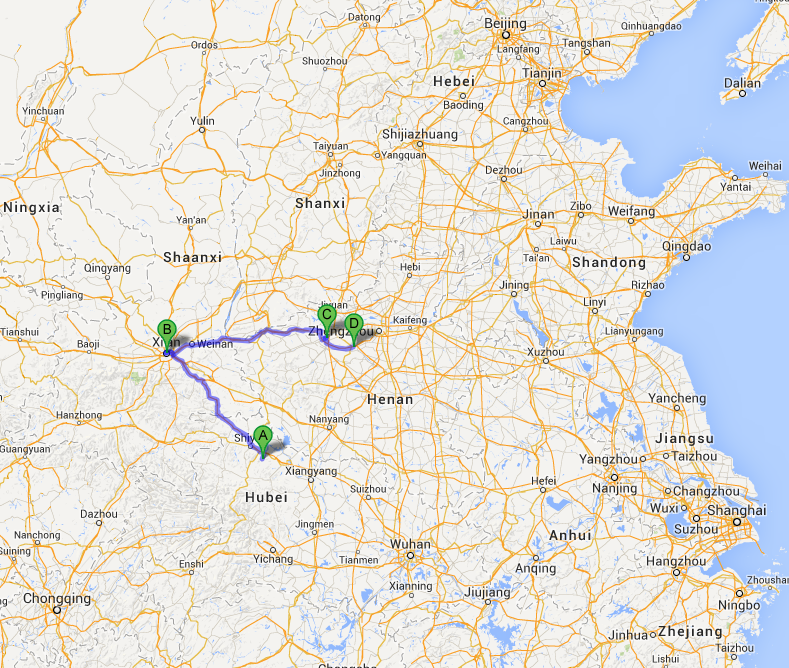
Despite Wudang’s serenity and peacefulness, our week there leaves us quite tired, due to a combination of 12hr days, relentless interviews and photo shoots, mountain hiking and cab shortages. Thus we are glad to board the Sunday morning bus to Xi’an, via Shiyan, the closest big city to Wudang, where we have a one-hour stopover.

Foreigners frequently stumble over the intonations and pronunciations of Chinese words, especially when reading from the “Pinyin” versions, i.e. written in the Latin alphabet. But in that one week, as we are trying to navigate a route out of Wudang, I experience more lost-in translation moments than ever before with “Xi’an” and “Shiyan”.

Continue reading “Letter from China: Xi’an and the road to Shaolin”

Culinary post from China: Xi’an and Luoyang

Note: This is a blog post about my six-month journey across India and China. To find out more about why I went on this trip, please read, Next book: From Kerala to Shaolin. In the interest of clarity, I am not publishing this “from China”, but Singapore, where I am back now.

P1150581

Biang biang mian

This post is a culinary addendum to Letter from China: Xi’an and the road to Shaolin

I go to Xi’an, that ancient crossroads of people and trade, expecting some of the best food on this trip; and it doesn’t disappoint. The Muslim quarter, in particular, is a veritable treasure trove of bites and eats. I do, however, recommend wandering off the main alley (pictured) and exploring some of the side lanes—more locals, greater variety, better prices.

Continue reading “Culinary post from China: Xi’an and Luoyang”

Letter from China: It’s Wu-dang!

Note: This is a blog post about my six-month journey across India and China. To find out more about why I went on this trip, please read, Next book: From Kerala to Shaolin. In the interest of clarity, I am not publishing this “from China”, but Singapore, where I am back now.

————————————————

A continuation of Letter from China: Guangdong and Fujian

Depressed in Shanghai

In early November, I return to China for the last major leg of the trip, a six-week journey—the longest so far—that will take me from Shanghai – Nanjing – Wudang – Xi’an – Shaolin – Weifang – Beijing.

Even though the hallowed Shaolin awaits, I am not looking forward to this trip. I need all my discipline to board that flight from Singapore to Shanghai on Nov 6th.

There are several reasons for this. The first is simply fatigue. After more than four months on the road, having covered more than 15,000km overland, I am just bloody tired. I am tired of searching for cheap hotels and the most cost-efficient overland journey. I am tired of packing my bags every four days and moving to the next place. I am tired of carrying around my voice recorder, camera, GoPro, phone and notebook wherever I go. I am tired of repeating my damn shpeel about Kerala and Shaolin. I am tired of looking at every person on the street as an interview subject. (I want to just look down and walk past you!) And I am tired of watching over my two team-members: as fun and independent as they are, I always worry about them, feeling somewhat responsible for their safety.

Continue reading “Letter from China: It’s Wu-dang!”

Speaking at the Singapore Biennale, Jan 25th

  Dear friends in Singapore, if you have nothing better to do on Jan 25th, do join Dr Khairudin Aljunied, a Malay Studies professor, and me for a discussion on Malaysian and Singaporean history, as part of the Singapore Biennale. I will be chatting about themes related to my first book, Floating on a Malayan Breeze. He will look at “History as Controversy:….in an increasingly … Continue reading Speaking at the Singapore Biennale, Jan 25th

More problems at Singapore’s mainstream media channels

One of the great ironies of modern Singapore’s media development is that even as politicians, establishment supporters and other conservatives continue to heap scorn on internet sites, the mainstream channels keep making mistakes, sometimes egregious ones. It is as if they are doing their utmost to make a mockery of their fans.

2013 proved a particularly horrible year for Singapore’s mainstream media channels, and they have started off 2014 on the same shot-riddled foot. Pointing out these errors is important not in order to have a laugh–although one can hardly blame Singapore’s beleaguered bloggers for indulging in a bit of schadenfreude.

The bigger reason is that, like so many other sacred cows of the Singapore model, media policies here are based on a seemingly immutable national orthodoxy about the role of elites: Singapore society must rely on a tiny, enlightened group of people, rather than the distributed intelligence of all Singaporeans. This belief manifests itself in everything from a government-knows-best attitude to the presumption that our restricted, elite-led mainstream media model is serving our country well. Continue reading “More problems at Singapore’s mainstream media channels”

From Kerala to Shaolin: Thanks to supporters

Dear friends, 2013 has been a crazy, fun, wild year. For the first time since college in the US, I spent more of the year outside than inside Singapore, my home. In completing my longest research trip to date, I travelled overland more than 20,000 km from Kaniyakumari at the southern tip of India to Beijing in China, crossing Nepal and the Tibetan plateau in … Continue reading From Kerala to Shaolin: Thanks to supporters

Loving Singapore’s “cheap” hawker food

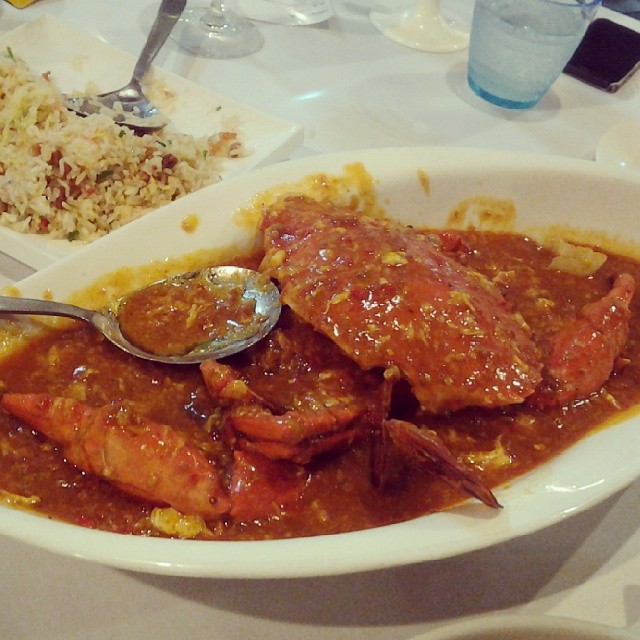
chilli crab

“I love local hawker food. There are not many countries in the world like Singapore where one can easily find reasonably priced food with the same high level of hygiene and great variety.” – MP Baey Yam Keng, in the wake of his recent $2.50 nasi padang.

Many people in the middle- and upper-classes love to cheer Singapore’s delicious cheap food. When my foreign friends ask me what’s great about Singapore, I often cite this (among other things).

Unfortunately for us all, it is a boast loaded with classist undertones. The main reason a country as rich and expensive as Singapore has such cheap hawker food is that many labour inputs are underpriced. Everybody from the lorry driver to the dish washer to the hawker is being underpaid. Indeed, for a country with a negligible agricultural sector, one would expect (the imported) food to cost more than in many other countries. Continue reading “Loving Singapore’s “cheap” hawker food”

Letter from China: Guangdong and Fujian

Note: This is an on-the-road blog post. To find out more about why I am on this trip, please read, Next book: From Kerala to Shaolin

————————————————

A continuation of First letter from China: Sichuan

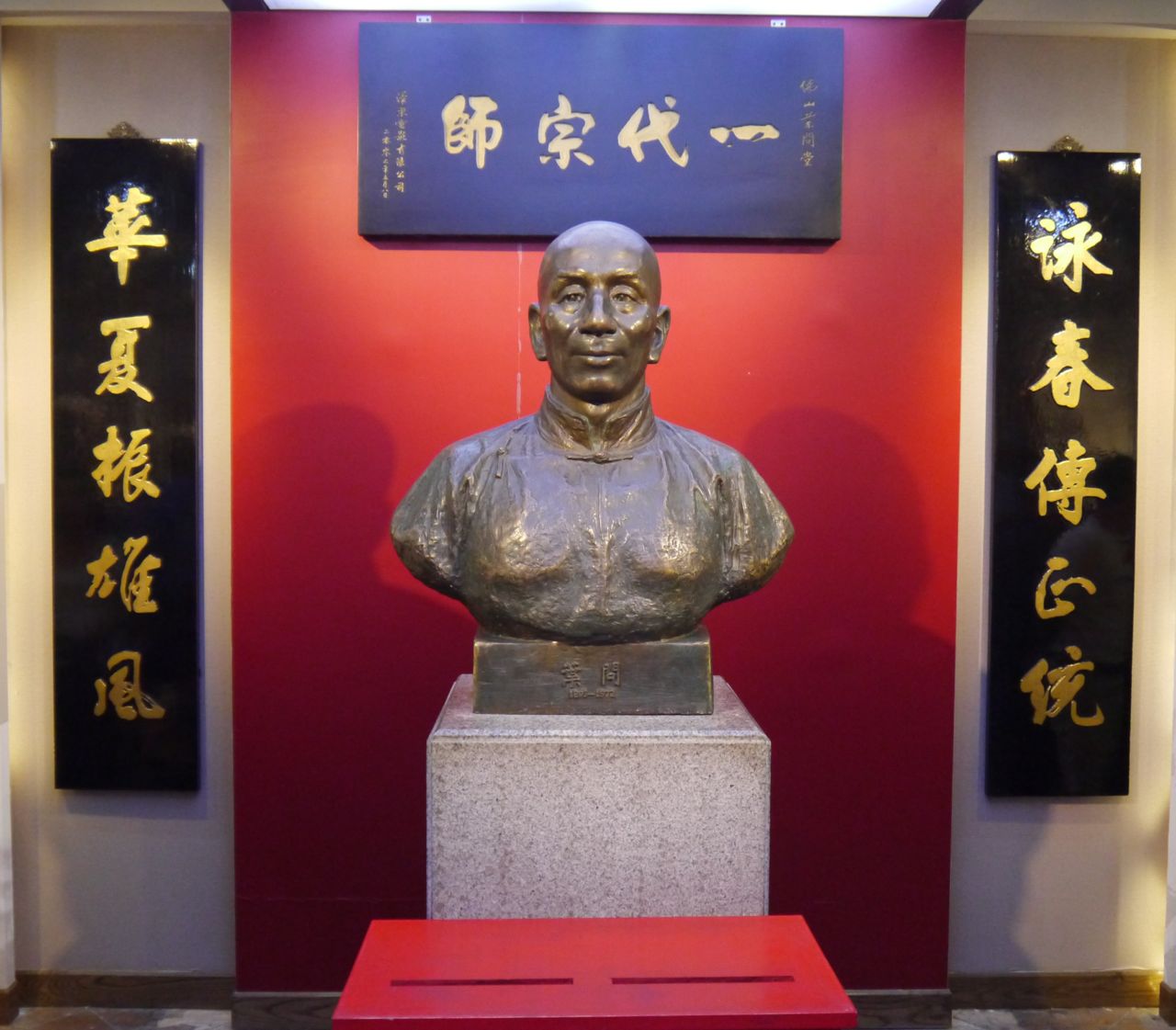
Ip Man small

Bust of Ip Man, Bruce Lee’s shifu, in Foshan, Guangdong

Buses

When we try to leave Sichuan for Guangdong (Canton), Jeffrey Chu, my Shanghai-based Taiwanese-American friend, Kirit Kiran, the Delhi-based photographer, and I are faced with the contemporary traveller’s worst scheduling nightmare: the Chinese national holidays. Our journey comes near the end of the weeklong holiday around October 1st, the national day of the People’s Republic of China, when in 1949 Mao Tse-Tung declared that “The Chinese people have stood up!”

There is certainly a lot of standing to be done. We stand in Emei, as hordes of domestic tourists—some with walking stick and camera, others dressed to the nines—flood the usually peaceful Emei shan, mountain. When we reach Chengdu, we stand outside the quaint boutique hotel I booked through booking.com; they are overbooked, and don’t have a room for us, and so after two hours of calling around they find us another hotel thirty minutes away.

Continue reading “Letter from China: Guangdong and Fujian”