Speaking at the Singapore Biennale, Jan 25th

  Dear friends in Singapore, if you have nothing better to do on Jan 25th, do join Dr Khairudin Aljunied, a Malay Studies professor, and me for a discussion on Malaysian and Singaporean history, as part of the Singapore Biennale. I will be chatting about themes related to my first book, Floating on a Malayan Breeze. He will look at “History as Controversy:….in an increasingly … Continue reading Speaking at the Singapore Biennale, Jan 25th

More problems at Singapore’s mainstream media channels

One of the great ironies of modern Singapore’s media development is that even as politicians, establishment supporters and other conservatives continue to heap scorn on internet sites, the mainstream channels keep making mistakes, sometimes egregious ones. It is as if they are doing their utmost to make a mockery of their fans.

2013 proved a particularly horrible year for Singapore’s mainstream media channels, and they have started off 2014 on the same shot-riddled foot. Pointing out these errors is important not in order to have a laugh–although one can hardly blame Singapore’s beleaguered bloggers for indulging in a bit of schadenfreude.

The bigger reason is that, like so many other sacred cows of the Singapore model, media policies here are based on a seemingly immutable national orthodoxy about the role of elites: Singapore society must rely on a tiny, enlightened group of people, rather than the distributed intelligence of all Singaporeans. This belief manifests itself in everything from a government-knows-best attitude to the presumption that our restricted, elite-led mainstream media model is serving our country well. Continue reading “More problems at Singapore’s mainstream media channels”

Loving Singapore’s “cheap” hawker food

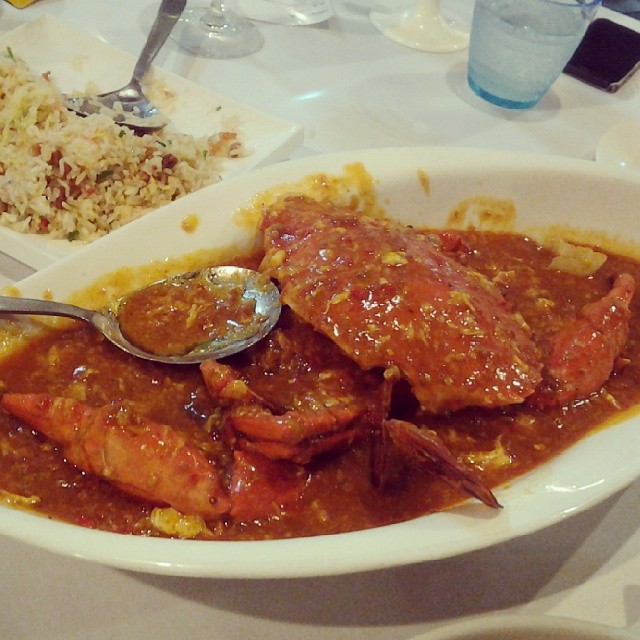
chilli crab

“I love local hawker food. There are not many countries in the world like Singapore where one can easily find reasonably priced food with the same high level of hygiene and great variety.” – MP Baey Yam Keng, in the wake of his recent $2.50 nasi padang.

Many people in the middle- and upper-classes love to cheer Singapore’s delicious cheap food. When my foreign friends ask me what’s great about Singapore, I often cite this (among other things).

Unfortunately for us all, it is a boast loaded with classist undertones. The main reason a country as rich and expensive as Singapore has such cheap hawker food is that many labour inputs are underpriced. Everybody from the lorry driver to the dish washer to the hawker is being underpaid. Indeed, for a country with a negligible agricultural sector, one would expect (the imported) food to cost more than in many other countries. Continue reading “Loving Singapore’s “cheap” hawker food”

Culinary post from China: Sichuan

P1030630

Mapo doufu

This post is meant to accompany my First letter from China: Sichuan. Since digestive difficulties have prevented me from tasting Chengdu’s wonderful food on this Kerala to Shaolin trip, I will instead narrate a story from April 2012, when I visited for the first time with my wife Li Ling.

Barely 15 minutes after reaching Buddha Zen, our hotel, we are on our way out. Ling has gotten directions to a local restaurant and we are walking briskly, after pulling on a thin extra layer for the crisp Spring evening. Unfortunately, we cover only about 300 metres before I get distracted by skewers of raw meat lying next to a charcoal grill. Perhaps more importantly, there is a wide tray of chilli flakes sitting next to it.

A few minutes later, the eager, young Chinese BBQ master is brushing the chilli onto sizzling meat cubes, using a giant paint brush, the kind one uses to paint walls. The meat is good enough, but we are to have much better.

I am ecstatic, though, that my mouth is finally on fire. I had spent months dreaming of this moment—my first chilli high in Sichuan. It is, I imagine, much like one’s first scotch in Scotland; or joint in Jamaica.

Continue reading “Culinary post from China: Sichuan”

Last letter from India: Manipur

Note: This is an on-the-road blog post. To find out more about why I am on this trip, please read, Next book: From Kerala to Shaolin.

————————————————

A continuation of Letter from India: Gatka

The first time I hear about Manipur is when I am doing my preliminary research into Indian martial arts, and something called “Thang-Ta”, which doesn’t sound very Indian at all, shows up. Subsequently, as I travel across India, different martial arts gurus insist that I must visit Manipur to see one of the country’s finest martial arts.

Having never been there, my perceptions of India’s Northeast are superficial. I believe it is a region of hill stations, tea plantations, and a thousand separatists; but beyond that I know little. If you look at a map of South Asia, you will see that the long journey of nationalism and statehood has left India with this chunk of territory, the Northeast, connected to the rest by an extremely narrow passage, which almost looks like India’s little pinky, holding on desperately (see map). Continue reading “Last letter from India: Manipur”

Letter from India: Gatka

Note: This is an on-the-road blog post. To find out more about why I am on this trip, please read, Next book: From Kerala to Shaolin. In the interest of clarity, although I wrote most of this letter when in India, I am actually clicking “Publish” when in S Africa, where I am visiting my wife for a few days.

————————————————

A continuation of Letter from India: Philosophies

Buses

Screen Shot 2013-08-29 at 8.11.07 AM

By the time Kirit and I reach Punjab, buses have broken our backs. Unable to secure a seat on any northbound train, we board a series of overnight buses—Pondicherry to Hyderabad; Hyderabad to Nagpur; Nagpur to Indore; Indore to Jaipur; Jaipur to Chandigarh; and, finally, Chandigarh to Amritsar—collectively taking more than 50 hours over some 3000km, greater than the distance from Hong Kong to Singapore, or Houston to San Francisco.

In Indore we break our journey for a few days, visiting my Nani’s house every day for home cooking. Then, as if to compensate for those comforts, our karma delivers the bus from hell. We have two “upper sleepers” on a “Non-AC bus” to Jaipur. This doesn’t sound too shabby, but when we board we find a dirty, old interior. The faux leather plastic on my bed’s “headrest” is completely worn, exposing the spongy foam beneath. Every time I lift my head up, I find little bits of black foam clinging lovingly to my hair. The bed itself is sandy. That is partly its steady state, and partly my doing, as I keep my soiled slippers up there with me, rather than down below on the even filthier bus floor, where they might get trampled on by even filthier slippers.

Across the aisle, on a double-sleeper on the other side of the bus, are my travel companions: an elderly man and his white terrier, “Kutta”, literally dog in Hindi. Kutta is actually quite cute, but he annoys me by barking sporadically and also because I’m envious of his royal diet: burfi, which I look at longingly, every time the man places one delicately in Kutta’s mouth. Kutta’s bark isn’t the only aural pain. At every available opportunity our bus driver blares his irritating horn, which in India can range from the multi-layered melodious to the fart-like. The racket is worse than anything those post-South Africa 2010 Vuvuzuela nuts conjured. I regret booking a sleeper in the front of the bus.

Continue reading “Letter from India: Gatka”

Letter from India: Philosophies

Note: This is an on-the-road blog post. To find out more about why I am on this trip, please read, Next book: From Kerala to Shaolin.

————————————————

A continuation of Letter from India: People

Philosophy and spiritual teachings have crept410px-BodhidharmaYoshitoshi1887 into conversations throughout the last eight weeks in India. Perhaps I should have expected this. Almost all Indian martial arts are grounded in spirituality, if not necessarily religion. Boddhidharma (pictured), who many believe brought some form of martial arts from South India to Shaolin sometime in the 5th-6th century, was a Buddhist monk.

Although, as somebody different reminds me every few days, back then Buddhism and Hinduism were not “religions” in the contemporary sense, and there might have been a lot more overlap between them. Many Hindus might have subscribed to the teachings of the Buddha; moreover, they would probably not even have identified themselves as “Hindus”, distinct from “Buddhists”. Even today, the terms “Hindu” and “Buddhist” do not have widespread currency across India. “I prefer to say that I am a follower of Lord Buddha’s teaching,” Kirit’s uncle, the secretary of a Japanese Buddhist organisation in Jaipur, tells me.1

All this is important, because as we consider the ancient connections between Chinese and Indian martial arts— a microcosm, perhaps, of broader cultural exchange—it is worth noting that undergirding those flows was not “religion” or “proselytisation” as we know them today, but rather a more universal ethos about living a good, honourable, spiritual life.

As such, the shorthand that I’ve been using this past year to describe kung fu’s origins—“Martial arts probably spread from India to China in the 5th-6th C with Buddhism as its vehicle”—is simplistic. Continue reading “Letter from India: Philosophies”

Photos from India: People

Note: This is an on-the-road photo journal. To find out more about why I am on this trip, please read Next book: From Kerala to Shaolin. Importantly, these are just some simple photos taken by yours truly. The really good photos on this trip are being taken by Kirit Kiran, a Delhi-based photographer and filmmaker. The best will appear in the actual book.

Kerala

P1100090

Cheruthuruthy: Waiting to bathe her soft toy

P1100138

Cheruthuruty: V. Kaladharan, publicity & research officer & S.S. in charge, Kerala Kalamandalam Continue reading “Photos from India: People”

Letter from India: People

Note: This is an on-the-road blog post. To find out more about why I am on this trip, please read, Next book: From Kerala to Shaolin.

————————————————

A continuation of Letter from India: Kalarippayattu

The best part about being on a long research trip is that I get to meet so many fascinating people. Every day. All the time. It is actually both a blessing and a curse, because I spend hours agonising over which people to spend more time with, which ones I may develop into character profiles for the book, which ones must be interviewed right there and then, which ones can wait till a later trip/phone call, etc.

As I went through the first editing process for Floating on a Malayan Breeze in late 2010, I had to omit, with great sadness, many different characters about whom I had already written. There was “Penang Lyn”, who ran Sweet Manna Matchmaking, helping, among others, Singaporean Chinese guys looking for Penang Chinese girls, in demand because they are apparently less materialistic than KL and Singapore girls.

Continue reading “Letter from India: People”